March 23, 2026
The New Era of AI-Native Design and The Rise of "Vibe Design"
In the new era of AI-native design, the creative process shifts from static wireframes to dynamic intent. By leveraging an infinite canvas, intelligent design agents, and portable systems like DESIGN.md, creators can explore ideas rapidly, iterate in real time, and seamlessly bridge the gap from concept to code. This evolution redefines collaboration, turning AI into a true creative partner that amplifies human vision rather than replacing it.
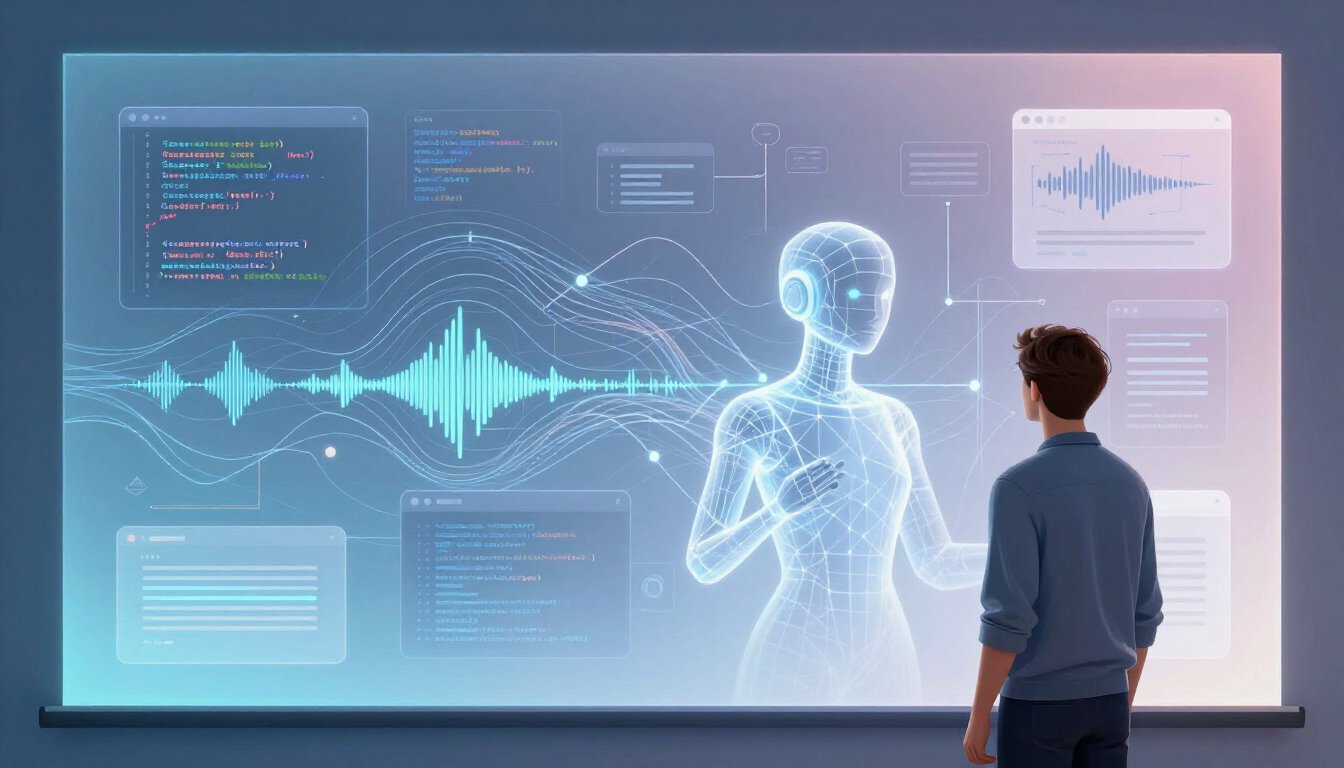
For decades, the design process has followed a predictable, linear path. It begins with a spark of inspiration, moves to rough sketches, then evolves into static wireframes, and finally, after countless hours of manual iteration, transforms into a high-fidelity prototype. Each step, while necessary, has often acted as a bottleneck, separating the initial creative vision from the final interactive product. However, a fundamental shift is underway. Artificial intelligence is no longer just a tool within the designer’s toolkit; it is becoming the very canvas upon which ideas are conceived, explored, and realized. This evolution marks a departure from traditional design software toward a new paradigm: the AI-native design canvas, where the focus moves from manipulating individual pixels to articulating and refining intent.
Creating with Intent, Not Just Wireframes
The most profound change in this new landscape is the starting point of the creative process. Historically, the blank page has been a source of both potential and paralysis, with designers often beginning by placing basic shapes and boxes to establish a visual hierarchy. Today, the entry point is shifting from the wireframe to the objective. Instead of asking, “Where should this button go?” the process begins with a higher-level inquiry: “What business goal are we trying to achieve?” or “What emotion should a user feel when they complete this task?”
This approach treats AI as a creativity multiplier. By feeding the system with your core intent, examples of inspiring work, or the user problems you aim to solve, the AI can instantly generate a multitude of divergent design directions. For example, a founder building a meditation app could start not by sketching a login screen, but by explaining the goal: “Create an onboarding experience that conveys tranquility and personalization, drawing inspiration from minimalist architecture and soft, natural light.” The AI can then produce several distinct visual languages and user flows that embody that feeling, allowing the creator to explore possibilities that might have taken days to sketch manually. This rapid exploration leads to a higher quality outcome because the designer can quickly converge on the strongest concept after seeing a wide array of possibilities, all grounded in the original strategic intent.
An Infinite Canvas for Convergent and Divergent Thinking
Supporting this new workflow requires a reimagined workspace. Traditional design tools, with their fixed artboards and rigid layers, often struggle to accommodate the non-linear nature of creative exploration. The solution is an infinite, AI-native canvas that gives ideas room to grow organically. This canvas acts as a central hub where inspiration in any form, whether it is a reference image, a snippet of code, a brand guideline, or a block of text, can be placed as contextual fuel for the AI.
This environment is built to amplify the natural rhythm of the design process: the constant dance between divergence and convergence. Early in a project, the canvas allows for expansive exploration, letting the AI generate numerous variations of a component or user flow. The designer can then step back, evaluate, and select the most promising direction, guiding the AI to refine and iterate. This collaborative loop ensures that the designer remains in control, using the AI’s generative power not as a replacement for their own judgment, but as a powerful engine for exploration.
The Design Agent as a Partner in Progress
Central to this new canvas is a sophisticated design agent capable of reasoning across the entire project’s evolution. Unlike a simple command executor, this agent understands the context of every element on the canvas, the history of design decisions, and the underlying goals of the project. This deep contextual awareness allows for more nuanced collaboration. For instance, when a designer asks for a more accessible color palette, the agent can propose alternatives that not only meet contrast standards but also align with the established visual theme and emotional tone of the application.
To manage the inevitable branching of ideas, an agent manager tracks progress and helps organize multiple, parallel explorations. This is akin to having a dedicated project manager for your creativity, ensuring that while you explore a radical alternative for a checkout flow, your primary design remains intact and organized. You can freely experiment, knowing that the system is keeping track of each path, allowing you to revisit, compare, and merge the best elements from different explorations without the risk of losing work or creating a chaotic, unmanageable file.
Portable Design Systems: The DESIGN.md Specification
A persistent challenge in modern product development is maintaining consistency across tools and teams. Design systems, the single source of truth for components and styles, are essential but often become siloed within specific applications. The introduction of an agent-friendly markdown file, such as DESIGN.md, represents a significant step toward solving this. This file acts as a portable specification for a project’s design rules, encompassing everything from color variables and typography scales to component structures and interaction patterns.
This innovation allows for unprecedented flexibility. A designer could extract the design system from a competitor’s public website for inspiration, generating a DESIGN.md file that outlines its core principles. More practically, a team can export their established system from Stitch and import it into a coding tool or another project, ensuring that a new feature prototype is built using the exact same visual language as the main application. This eliminates the tedious work of manually replicating styles and reduces the friction that often occurs when handing off designs to development.
Iteration in the Flow of Real-Time Interactivity
Design is fundamentally an act of refinement, and the feedback loop between ideation and validation is critical. The ability to transform static screens into interactive prototypes instantly is a game-changer for maintaining creative momentum. Instead of exporting designs to a separate prototyping tool and manually defining links, a designer can now stitch screens together in seconds within the same environment. With a single click to play, the user journey becomes interactive.
The true power emerges in the AI’s ability to assist with this process. By anticipating user flows, the system can automatically generate logical next screens based on a button click, mapping out complex journeys without the designer having to manually define every connection. This rapid, real-time feedback loop empowers the designer to test a hypothesis, refine an element, or even overhaul an entire flow, and then instantly experience the result. This means that the polishing and validation of ideas, which often occurs at the very end of a design cycle, can now happen continuously throughout the process, ensuring that the final product is more thoroughly tested and refined.
A New Form of Collaboration with AI
This evolution transforms the nature of collaboration in design. It extends beyond human-to-human partnerships to encompass an integrated creative partnership with AI that spans the entire workflow. One of the most natural forms of this collaboration is through voice. By speaking directly to the canvas, a designer can treat the AI as a sounding board. Asking for real-time design critiques, or dictating commands like “give me three different menu options” or “show me this screen in a different color palette,” allows the creator to remain in their flow state without breaking concentration to navigate menus or manipulate tools manually.
This dynamic dialogue, where the AI can even interview the designer to clarify goals, helps uncover the strongest ideas through critique and conversation. It ensures that the technology serves as an active partner in the creative process, pushing the designer to articulate their reasoning and explore alternatives they might not have considered on their own.
Bridging the Final Gap: From Design to Code
Ultimately, a design is only as valuable as its ability to be built. The collaboration extends to the development team through a suite of integration tools. By using a Model Context Protocol (MCP) server and an SDK, the design canvas can act as a bridge to the rest of the development workflow. Skills and tools allow for a seamless handoff, where designs can be exported not just as static assets, but as structured components that can be directly integrated into developer environments like AI Studio and other coding platforms.
This ensures that the partnership between designers, AI, and developers remains synchronized. The developer receives a design that is not only visually faithful to the original intent but is also structured in a way that aligns with their coding tools and processes. This dramatically reduces the friction and misinterpretation that often plagues the handoff stage, closing the gap from idea to reality from days to minutes.
In conclusion, we are witnessing a paradigm shift where the role of the designer is elevated from a craftsman of pixels to a conductor of intent. By leveraging an AI-native canvas, a reasoning design agent, portable design systems, and seamless integration with code, the process of building software is becoming more fluid, exploratory, and collaborative. The true promise of this new era is not that AI will design for us, but that it will empower us to explore, iterate, and realize our most ambitious ideas with a speed and fidelity that was previously unimaginable, ultimately allowing us to focus on what matters most: creating meaningful and impactful user experiences.
Published March 23, 2026